
Structure
What Is The Difference Between Front-End Developer And Backend Developer
Front-End Vs. Back-End Development: What's The Difference?
Front-End Vs. Back-End Difference
What Is Front-End Development?
What Does A Front-End Developer Do?
Common Programming Languages For Front-End Development
Essential Front-End Frameworks And Libraries
What Is Back-End Development?
What Does A Back-End Developer Do?
Back-End Tools And Frameworks
Which Path Is Right For You?
Front-End vs. Back-End Development: What's the Difference?
One of the first vital decisions aspiring software developers must make is whether to focus on front-end or back-end development. For those new to coding, this choice can be quite challenging. But what is the difference between front-end and back-end development, and which should you choose?
This article will explain the key differences between front-end and back-end development, explore the roles of each, and help you find which path best aligns with your interests and goals.
Front-End vs. Back-End Difference
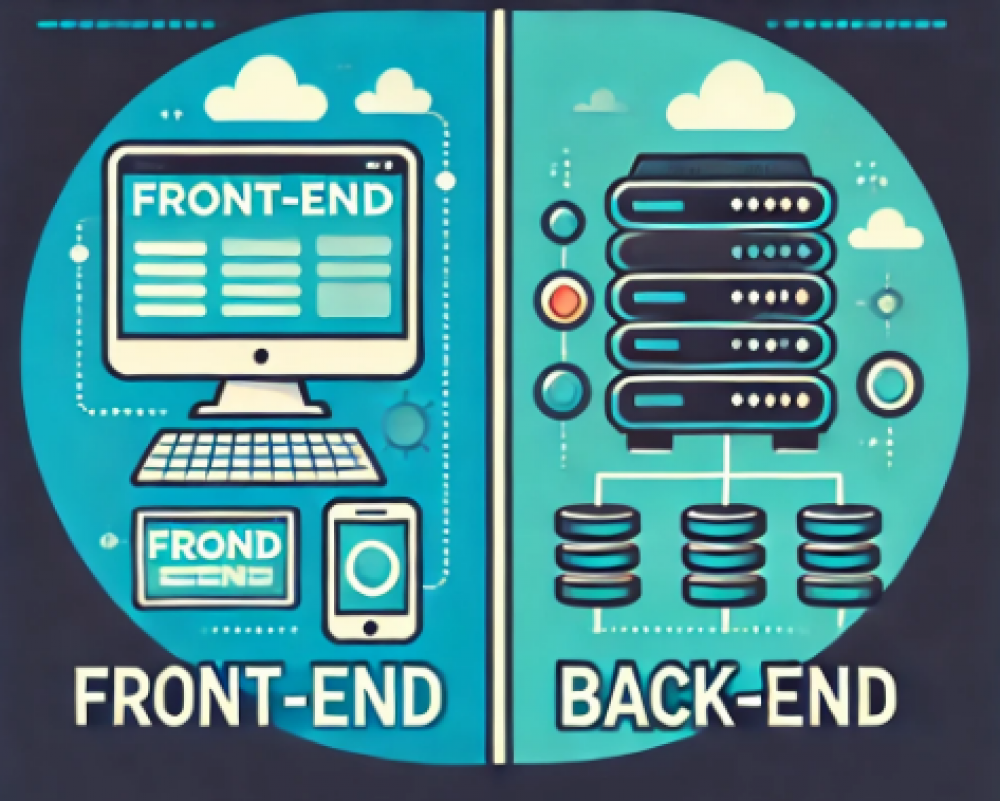
Any software application has two main parts: the client-side (front-end) and the server-side (back-end). While these parts work together to deliver a seamless user experience, they function independently and involve different skill sets and tools.
Front-End: This is the visible, interactive part of a website or application—the user interface (UI), visual design, and layout. You interact with the front end when visiting a website, shopping online, or a blog. Front-end development focuses on creating everything the user sees and interacts with, from buttons and images to text and navigation. Knowing the difference between a front-end developer and a web developer is crucial. The former focuses on interface design and responsiveness. The latter may handle a wider range of web tasks.
Back-End: This is the server-side logic that runs behind the scenes. It involves handling data, executing commands, and communicating with the database. For instance, when you place an item in your shopping cart, post a comment, or create a user account, the back-end processes that data, stores it, and retrieves it as needed.
Understanding the difference between front-end and back-end developer work will give you a clearer picture of how these roles collaborate. Typically, these two sides communicate through Application Programming Interfaces (APIs), which allow the front-end to send and receive data from the back-end.
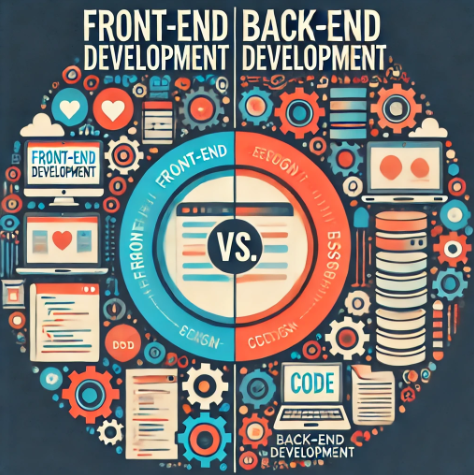
What is Front-End Development?
Front-end is all about what users see and interact with directly. When you load a webpage or open a mobile app, the design, layout, and responsiveness result from front-end development.
This process involves:
creating the page structure,
designing user interfaces,
optimizing the user experience (UX), and
ensuring the app works and looks right on all devices.
A key aspect of front-end development is working with APIs to fetch data from the back-end and display it to users. Without this, the interface would be static, and dynamic data interactions would not be possible.
What Does a Front-End Developer Do?
A front-end developer's main job is to build and optimize a site's visual elements. They must ensure they work well and look good, and they are tasked with ensuring the interface is both functional and engaging. The difference between a UI/UX designer and a front-end developer lies in their focus: UI/UX designers emphasize how a product looks and feels, while front-end developers make those designs functional using code.
Here's a breakdown of common front-end developer tasks:
Structuring web pages using HTML (HyperText Markup Language).
Styling content with CSS (Cascading Style Sheets) to control layout, colors, and fonts.
Optimizing web pages for better search engine rankings (SEO).
Integrating interactive elements like buttons, images, and forms.
Designing intuitive and user-friendly interfaces.
Analyzing user behavior and refining the design to enhance the overall user experience (UX).
Connecting to APIs to display real-time data on the interface.
It's also essential to recognize the need for collaboration between front- and back-end developers. They must work together to ensure data flows seamlessly from the server to the user's screen.
Common Programming Languages for Front-End Development
Like an artist needs brushes and paint, a front-end developer needs coding languages to bring their designs to life. Here are some of the most essential languages that front-end developers use:
HTML: The backbone of any web page, defining the structure and content. Although not a programming language, HTML is crucial for creating the framework of a website.
CSS: If HTML is the structure, CSS is the style that makes it visually appealing. CSS allows developers to add colors, fonts, layouts, and other design elements to web pages, transforming basic HTML into engaging interfaces.
JavaScript: JavaScript brings interactivity to a website. It powers the interactive features that make a website functional, such as a dropdown menu, a pop-up notification, or a dynamic form.
Front-end developers often learn TypeScript, too. It's an advanced version of JavaScript. It offers better tools for debugging and maintaining large codebases.
Understanding what software and tools a front-end developer uses can also give you insight into frameworks like React, Vue, and Angular, which are vital for building dynamic interfaces.
Essential Front-End Frameworks and Libraries
Front-end development is not just about coding; it's also about efficiency. To streamline their workflow, developers often rely on frameworks and libraries that simplify common tasks and allow them to build robust applications faster.
Here are some popular frameworks and libraries used in front-end development:
React: Developed by Facebook, React is a powerful JavaScript library for building user interfaces, especially for single-page applications.
Vue: A versatile framework that's easy to integrate and is gaining popularity for building dynamic web interfaces.
Angular: Created by Google, Angular is a robust framework for building large-scale web applications using TypeScript.
What is Back-End Development?
To understand back-end development, think of a website or app a house. The front end is the exterior—what people see at the house. On the other hand, the back-end is like the electrical wiring, plumbing, and internal systems that make the house functional. While the front end is the visual layer, the back end handles data storage, logic, and functionality behind the scenes.
When you buy an item online, the back end handles it. It processes the payment, updates the inventory, and arranges delivery. It ensures that everything happens smoothly without the user worrying about the details.
Knowing the difference between a front-end and a back-end developer can clarify how their roles complement each other. Front-end developers focus on what users see, while back-end developers handle the behind-the-scenes processes.
What Does a Back-End Developer Do?
A back-end developer ensures that all the behind-the-scenes processes in an application work correctly. They build the logic that powers the app, manage data, and ensure everything runs efficiently.
Some of the core tasks of a back-end developer include:
Designing the architecture and infrastructure of an application.
Developing APIs to connect the front-end and back-end.
Managing and querying databases.
Scaling applications to handle large amounts of data and user traffic.
Implementing security measures, such as user authentication and data encryption.
Ensuring seamless integration between different parts of the system.
Knowing the difference between front-end, back-end, and full-stack developers can help you choose a specialization. Full-stack developers cover both ends but often need more in-depth expertise in front- or back-end than specialized developers.
Back-End Tools and Frameworks
Back-end developers use various tools, frameworks, and platforms to build and manage applications. Some of the most widely used include:
Node.js (Express, Nest)
Python (Flask, Django)
PHP (Laravel)
Ruby (Ruby on Rails)
And other: MongoDB, Cloud Services, Docker
Front-End vs. Back-End vs. Full Stack Development
We've covered both front-end and back-end development. Now, let's discuss full-stack development. A full-stack developer is someone who works on both ends—building the user interface and managing the server-side logic. They have a broad skill set and are often seen as "jacks-of-all-trades" in the development world.
While full-stack developers can work on both the front-end and back-end, they typically specialize in one area while maintaining a broad understanding of the other. For example, they might be more focused on UI/UX design while still being able to handle basic server-side tasks.
Understanding the distinction between front-end designers and developers is also crucial here, as designers focus on visual creativity while developers implement functionality.
Which Path is Right for You?
With the differences between front-end, back-end, and full-stack development, you might wonder which one fits you best. Here's a quick guide:
Front-end development is perfect for those who enjoy design, creativity, and crafting user experiences. It might also be your calling if you like working with visuals and user interfaces.
Back-End Development. Ideal for logical thinkers who enjoy problem-solving and working with data. If you prefer building the systems that make applications function, back-end development could be the right choice.
Full-stack Development is an excellent option if you enjoy versatility and want to understand the entire development process. Full-stack developers need a keen eye for design and strong problem-solving skills.
Whatever you choose, front-end and back-end skills are in high demand in today's job market.
If you want to start a career in software development, join our software engineering apprenticeship. At Debvrother, you'll gain foundational skills in full-stack development, with the option to specialize in either front-end or back-end. Plus, our apprenticeships are tuition-free, meaning you won't have to worry about financial barriers as you build your career.